

AGVs vs. Self-Driving Cars: Same Mission, Different Roads

Autonomous technology is no longer science fiction—it’s shaping the way we live and work. From self-driving cars navigating city streets to Automated Guided Vehicles (AGVs) moving goods in warehouses, autonomy is everywhere. But how do these two technologies compare? People often ask: “Are AGVs like Tesla’s Full Self-Driving or Waymo’s autonomous cars?” The answer: They share more than you think, but they’re built for different worlds.
The Common Ground: Autonomy at Its Core
Both AGVs and self-driving cars aim to move safely and efficiently without human drivers. They rely on sensors, mapping, and AI to make decisions. This shared foundation is why the comparison makes sense—both technologies represent a shift toward automation, reducing human error and increasing productivity.
Different Worlds, Different Challenges
Here’s where the paths diverge:
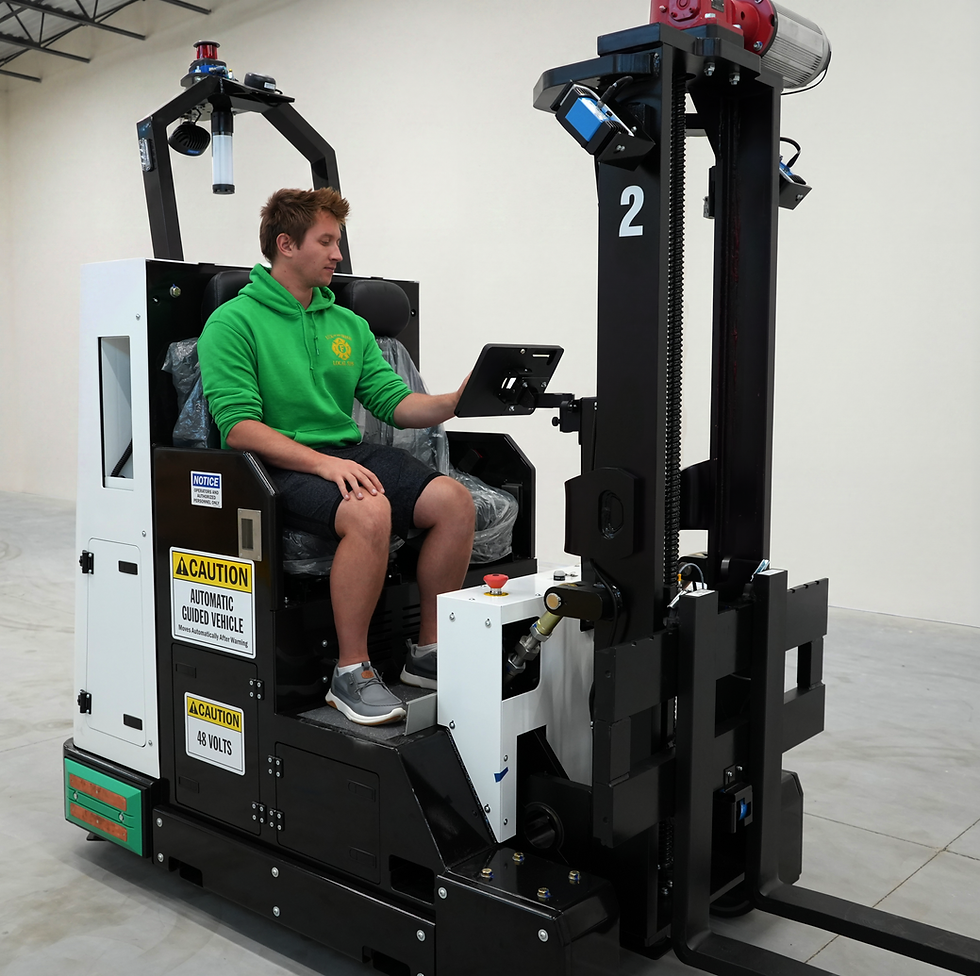
AGVs operate in structured, predictable environments like warehouses and factories. Everything—from floor layout to traffic flow—is controlled. Their mission? Maximize efficiency and consistency.
Self-driving cars face open roads filled with unpredictable variables: pedestrians, weather, traffic, and countless unknowns. Their mission? Adaptability and safety in chaos.
How AGVs Traditionally Worked
For decades, AGVs followed fixed paths using tape, reflectors, or magnets. A central traffic system coordinated every move. This works well for stable environments but is not ideal for environments that demand flexibility.
The Evolution: Smarter, More Adaptive AGVs
AGVs are beginning to change the game. They use SLAM (Simultaneous Localization and Mapping), real-time mapping, and machine learning to adapt dynamically. Instead of “follow the line,” they now “figure it out safely.” This evolution means:
Faster response to layout changes
Improved safety in shared spaces
Greater scalability for growing operations
Fleet Intelligence: Teamwork vs. Independence
AGVs work as a team, coordinated by a central system that schedules tasks and manages traffic. Self-driving cars, on the other hand, act independently, making decisions locally while sharing data to the cloud. But the line is blurring—next-gen AGVs can coordinate locally and make smarter decisions together.
Why This Matters for Your Business
For manufacturers and logistics leaders, smarter AGVs mean:
Operational Efficiency: Reduce bottlenecks and labor costs.
Safety: Minimize human exposure to hazards.
Scalability: Adapt to changing layouts without costly reprogramming.
Investing in AGVs isn’t just about automation—it’s about future-proofing your operations.
Ready to see how AGVs can transform your material handling? Contact us today to learn more.


Comments